
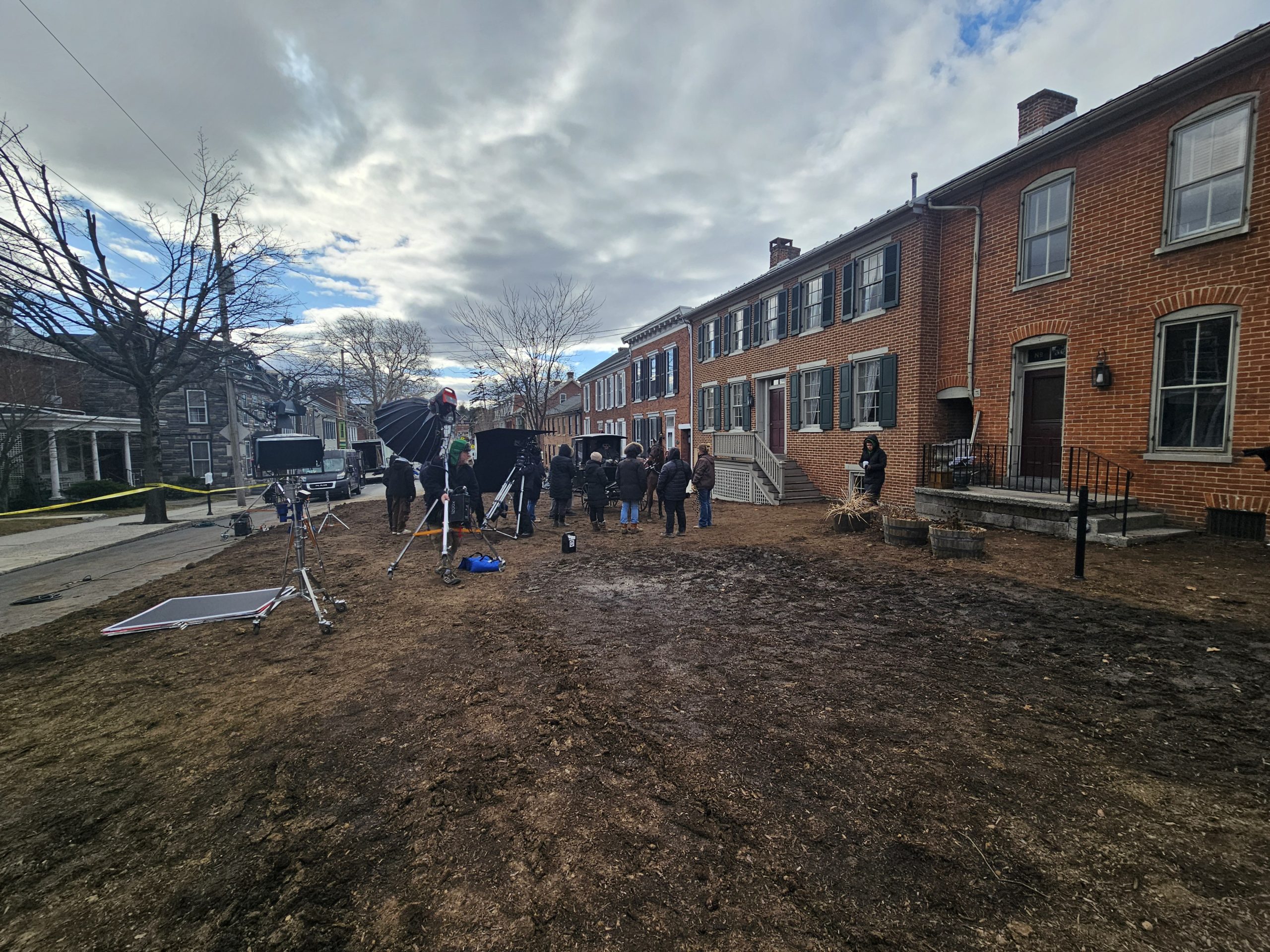
As the dust settles, I find myself reconciling the hum of a full-scale movie production with the quiet dignity of our historic towns and landscapes throughout Adams County, Harpers Ferry, West Virginia and Loudoun Heights, Virginia.
For one month, our familiar streets, fields and historic homes transformed into a living, breathing film set. Nearly 50 crew members and 38 actors flowed in and out daily, six days a week, often for 12-hour stretches, our beloved extras, background actors, our living historians’ numbers too great to count, though the crew arrived first and were the last to leave long after sunset. What unfolded was not chaos, but choreography.
Each location had to become a temporary world: housing people, equipment, catering, medical care, education, transportation and safety — all rebuilt from scratch day after day. Giraffe cranes rose beside centuries-old structures. Rain towers stood ready against unpredictable skies. Portable restrooms, warming tents and makeshift craft service tables appeared in places that, days before, were untouched wilderness.
Coffee steamed in the cold mornings. Tea, water and food of every kind sustained a cast and crew with every imaginable dietary need: vegan, vegetarian, pescatarian, meat lovers, coconut-water devotees and more. Fresh fruit, vegetable trays, cheeses and deli meats were sourced daily from local grocery stores. Meals were served at precise six-hour intervals, as required by SAG regulations, with additional meals provided whenever filming ran long. Breakfasts, lunches and late dinners filled our town’s restaurants night after night.
Behind the scenes, the planning was relentless. Every costume, prop, piece of furniture and technical detail had to be ready each morning. A medic remained on set from the first arrival to the final departure to ensure everyone’s safety. When a child actor — one of our lead actors — was present, a dedicated teacher worked on set every single day, ensuring education never paused for art.
And then there were the moments of magic.
Scenes unfolded so powerfully that seasoned cast and crew members quietly wiped tears from their faces. Intimate performances brought a hush so complete it felt sacred silence that seemed to settle into the soul of everyone present. Exhaustion ran deep, but so did purpose. Even at our most tired, we knew we were witnessing something rare being born.
As film commissioner, I reflect on what it means when a production shares space with a town. Filming arrived in January, our quietest season and delivered an economic infusion that touched every corner of the county, with more than $100,000 just in hotel rooms alone, from landscapers and caterers to restaurants, hardware stores and specialty shops. Gifts were purchased locally as tokens of gratitude exchanged among cast and crew, small gestures acknowledging an extraordinary collective effort.
In my next article, I will share the financial transparency behind the production: a breakdown of the checkbook I oversaw, showing exactly how filming dollars circulated through Adams County. From Ace Hardware to Kennie’s Market, Giant, Weis and from Ram board and painter’s booties to every minor yet essential supply, the story of a film is written not only on screen, but in receipts, paychecks and local businesses supported.
One moment stands out vividly. A snowstorm swept through on Sunday, Jan. 25, 2026. By Monday morning at 8:30 a.m., we were back at work inside historic homes like the Shriver House, carefully laying Ram board throughout two properties to protect irreplaceable floors. Preservation and production moved hand in hand.
As the dust truly settles, I look ahead. Meetings are already underway for projects scheduled to begin filming in March 2026, with multiple productions building into the future of our county as well. I continue to petition my county and state leaders to recognize and financially support the immense opportunity film brings — not just creatively, but economically — to every business and resident it touches. Petition those in power over our county funds and state funds to support our hometown film office, Gettysburg Film Commission.
May we bring history one film at a time for decades to come.
In the next article, I will offer a bird’s-eye view of this filming phenomenon. For now, I remain in awe of what happens when history, community and storytelling converge — and how, even in exhaustion, we are left with something lasting.
Kris Webb is co-founder/film commissioner of Gettysburg Film Commission and administrator for Cinema Under the Stars, GFC’s community outreach event. Visit us at gettysburgfilmcommission.org.
