
In the summer heat of July 1863, two men arrived in Gettysburg carrying more than cameras. They carried a responsibility to history.
Photographer Alexander Gardner and his field operator, Timothy O’Sullivan, stepped onto a battlefield still scarred by the deadliest conflict ever fought on American soil. What they captured would forever change how the nation viewed war.
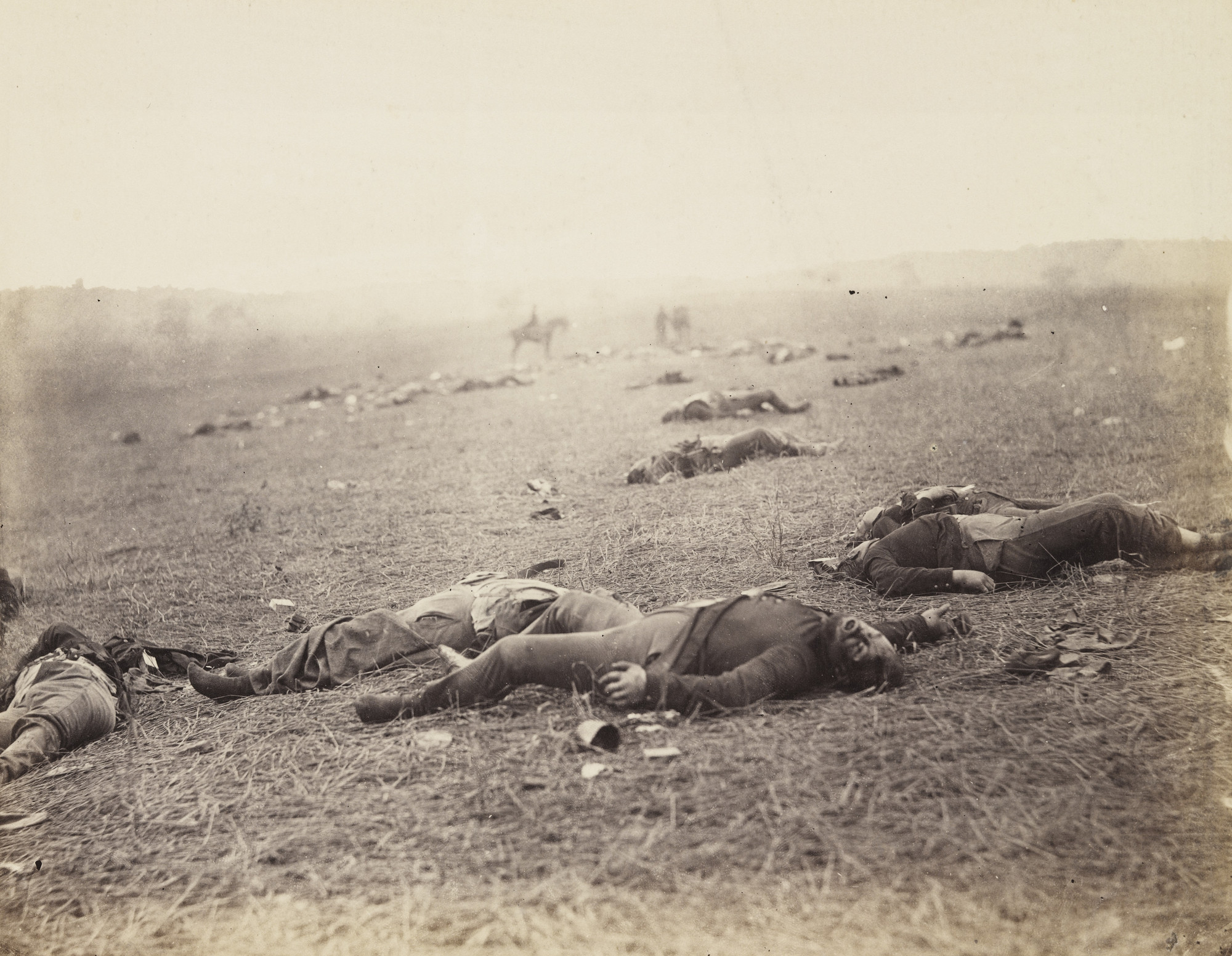
Their photographs did not celebrate heroism. They did not glorify victory. Instead, they revealed the devastating human cost left behind when the fighting stopped. Among their most enduring images was A Harvest of Death, a haunting photograph of fallen Confederate soldiers stretched across a Gettysburg field. For many Americans, it was the first time war was seen not through paintings, speeches, or newspaper reports, but through an unfiltered lens. The reality was staggering.
Photography in 1863 was far from simple. Glass plates coated with wet collodion had to be exposed and developed within minutes. Every chemical bottle, every fragile plate and every piece of equipment had to survive rough roads and long journeys before a single image could be made.
Co-Producer Chris Jones of the upcoming film, “Gettysburg 1863,” reflected on the challenge: “In today’s modern world, with technology at our fingertips, we have normalized the ease of photography. In July 1863, when Alexander Gardner, assisted by Timothy O’Sullivan, took their well-known photographs of the Confederate dead on the Rose Farm after the Battle of Gettysburg, there was nothing easy about it.”
Jones explained that Gardner’s mobile darkroom wagon can often be seen in the background of photographs because time was critical. The glass plates had to remain wet throughout the entire process.
“Just like today’s movie making, time is money,” Jones said. “A very small amount of time wasted can become a very large amount of money down the drain.”
More than 160 years later, that dedication to storytelling remains remarkably familiar. From Gardner’s wagon parked along a battlefield to modern production trucks parked beside a film set, storytellers continue to overcome extraordinary obstacles to preserve moments that matter. The tools have changed. The purpose has not. As photography evolved into motion pictures, another revolution began.
In the late 19th century, pioneers such as the Lumière Brothers introduced audiences to moving images through short films depicting workers leaving factories, city streets bustling with life and ordinary people engaged in everyday routines. These films were often shown in fairgrounds, music halls and community gathering spaces. They were brief, sometimes only a few minutes long, but they captivated audiences. People didn’t simply watch films. They gathered around them.
Films were accompanied by lecturers, musicians and lively audience participation. Long before streaming services and smartphones, cinema served as a communal experience where neighbors sat shoulder to shoulder, learning, laughing and discovering the world together. As technology advanced, cameras became instruments of social change.
During the Civil Rights Movement, photographs and film footage brought viewers directly into the struggle for equality. Images from protests, marches, and community gatherings transformed public opinion and inspired action. The camera became more than a recording device: it became a witness. The power of film has always rested in its ability to connect us to one another. Few understood that better than French film archivist Henri Langlois, founder of the Cinémathèque Française.
Langlois believed films were not meant to sit unseen in vaults. His philosophy was simple: “Just like people have to go for a walk, films have to run. If you just keep them in vaults, they die.” His philosophy centered on the belief that film is a living art form meant to be watched, not merely stored as historical artifacts. His words resonate deeply today.
At the Gettysburg Film Commission, we believe preserving film means more than protecting reels and digital files. It means creating opportunities for people to experience stories together. It means building partnerships, creating conversations and fostering spaces where history, education and entertainment intersect.
This year has been a remarkable season of collaboration. Through our Cinema Under the Stars series, community partners have helped transform open spaces into outdoor theaters were families, friends, visitors and neighbors gather beneath the night sky to share a cinematic experience.
We invite you to join us on July 2 at Seminary Ridge Museum and Education Center for our next Cinema Under the Stars screening. From 9 to 10:30 p.m., we will present “Independence,” from HBO’s acclaimed miniseries John Adams. It is more than a film screening. It is an opportunity to gather.
In 2023, we were asked a question: “What will it take to get people back into theaters?” Perhaps the answer is not found in technology. Perhaps it begins with understanding the power of film itself. The power to tell stories. The power to educate. The power to inspire. And most importantly, the power to bring people together.
We can stay home and stream a movie alone. Or we can sit beneath the stars, or in a theater, surrounded by neighbors and strangers alike, sharing laughter, reflection, conversation and wonder. There is something profoundly human about experiencing a story together.
In the 19th century, families often traveled to educate their children, believing learning extended beyond the walls of a classroom. They sought experiences that broadened minds and strengthened communities. Perhaps it is time to rediscover that spirit. Let us teach our children. Let us preserve our stories. Let us gather once again in places where ideas are shared and imaginations are ignited.
From a photographer standing on a battlefield in 1863 to filmmakers creating stories in 2026, one truth remains unchanged: Stories matter. And so does gathering to experience them together. May we never lose sight of the power of gathering.
Kris Webb is co-founder/film commissioner of Gettysburg Film Commission and administrator for Cinema Under the Stars, GFC’s community outreach event. Visit us at gettysburgfilmcommission.org.
