
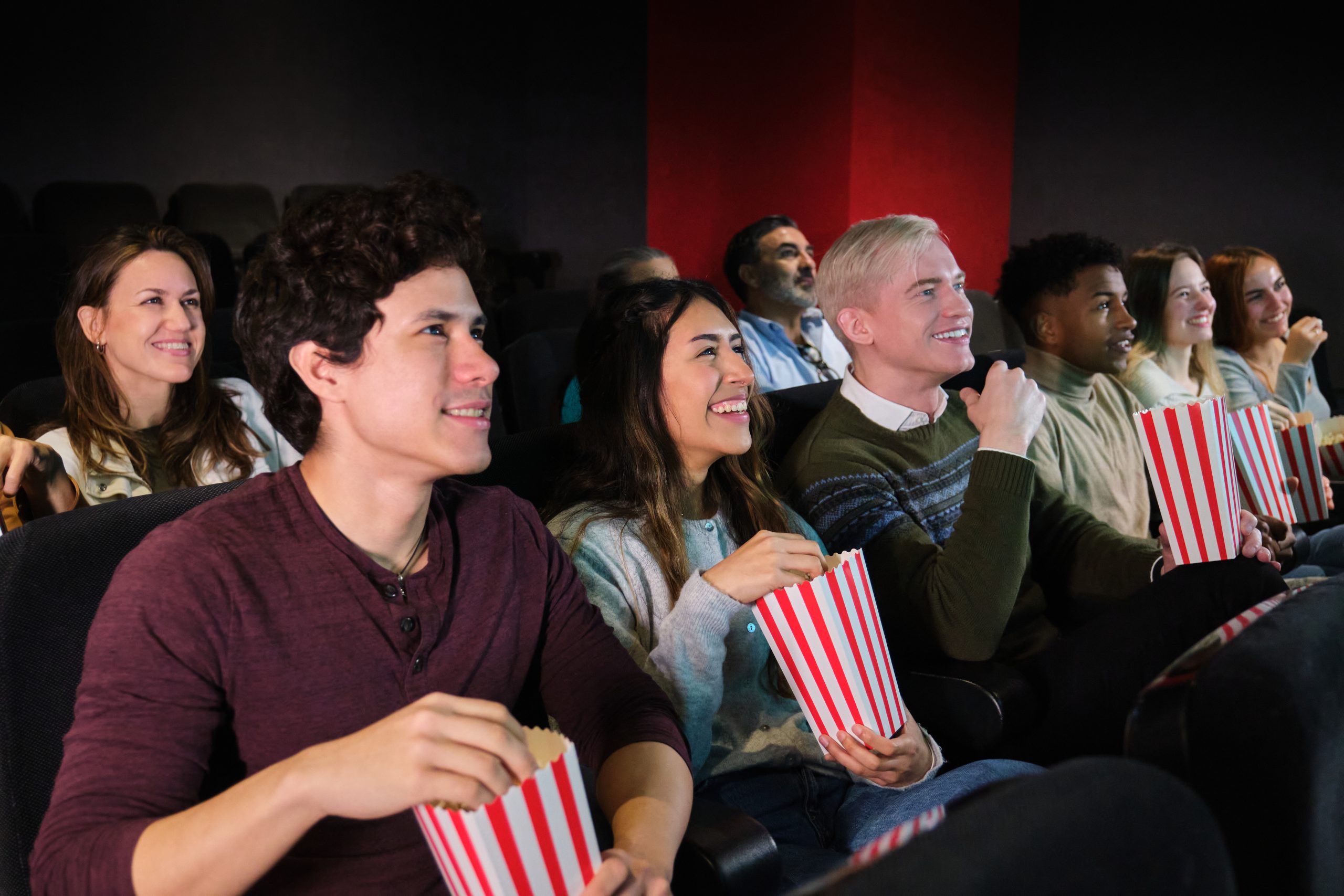
There is still magic in walking into a movie theater.
It’s not the kind of magic that comes from the latest streaming service, the newest TV or the deepest, most comfortable recliner money can buy.
Instead, it’s the magic that happens when you walk through the doors of a theater, take your seat amongst strangers, the lights go down, and suddenly, for the next few hours, an entire roomful of people shares the same experience.
Bo Brinkman, director, writer and producer of “Gettysburg 1863” said, “I was reminded of that magic this past weekend. A friend and I decided to see a classic film in Los Angeles. At first, I was reluctant. The prospect of an hour-long drive through Los Angeles traffic, with gasoline approaching six dollars a gallon, was hardly inspiring. After spending my days immersed in post-production work on ‘Gettysburg 1863,’ the easier choice would have been to stay home, collapse into a chair and let the world come to me through a screen.
“But I forced myself out of the house. And I am profoundly glad I did. We drove to the Aero Theater in Santa Monica, a remarkable venue built by the Douglas Aircraft Co. in 1940. I had always wanted to visit it. In all my years living in Los Angeles, somehow, I never had.
“That afternoon, the theater was showing the 1963 classic, ‘It’s a Mad, Mad, Mad, Mad World’ on 70 mm film. I honestly cannot remember the last time I saw a movie projected on film, much less 70 mm. I expected the theater to be nearly empty. It was 1 p.m. on a beautiful, sunny Los Angeles afternoon. Who would leave the sunshine to sit inside and watch a movie that is more than 60 years old?
“Apparently, about 300 people would. The theater was packed. And then the lights went down. On the enormous screen, the film came alive in a way television had never allowed me to experience. Its rapid-fire dialogue, situational comedy, screwball absurdity, dark humor, clowning and slapstick collided with extraordinary precision. Every glance mattered. Every pause mattered. Every raised eyebrow, gesture and silent reaction from the actors became part of the joke.
“And then came laughter. Three hundred people laughing together. Not scattered chuckles from individual viewers sitting alone in their homes, but an entire audience erupting simultaneously. One laugh fed another. A reaction in one corner of the theater swept across the room. The energy built and built until the theater itself seemed to become part of the movie. That is something a television screen cannot reproduce. At the end, the audience applauded. Not because we were required to. Not because someone told us to. We applauded because we had experienced something together.
“As we walked out, the crowd was jubilant. People were smiling. Talking. Laughing. There was an almost tangible lightness in the air. And I realized that I felt different. I felt happy, relaxed and refreshed. For two and a half hours, I had forgotten about traffic, gasoline prices, deadlines, computers, schedules and the daily grind. I had been part of a roomful of people who had gathered for the simple, almost sacred pleasure of watching a movie. And I began thinking about what theaters have meant to us for more than a century. During the Great Depression, from 1929 to 1939, people stood in lines outside movie theaters that could equal the lines at soup kitchens and bread lines. People were struggling to survive, yet they still found a few coins to buy a ticket.
“Why? Because movies provided another kind of nourishment. They offered laughter when there was little to laugh about. They offered adventure when daily life had become painfully ordinary. They offered romance, hope, fantasy and escape. For a few hours, people could sit together in the dark and believe in another world.
“Perhaps we need that nourishment again. Today, there are more distractions than ever. We can watch nearly anything from anywhere. We can pause it, rewind it and watch it at two in the morning. We can stay home in our pajamas and never leave the comfort of our couches. There is nothing wrong with that. But it is not the same.
“No matter how enormous our televisions become, no matter how sophisticated our sound systems are, no matter how comfortable our recliners may be, they cannot replace the experience of walking into a theater filled with strangers. Because the audience is part of the movie. The laughter is part of the movie. The silence is part of the movie. The gasp from somewhere behind you, the child asking a question, the couple holding hands, the elderly patron remembering when they first saw the film, the applause at the end, all of it becomes part of the experience.”
We do not simply watch a movie. We experience it together. And we desperately need places where we can experience things together.
In Gettysburg, we are fortunate to have the historic 1925 Majestic Theater, where the community regularly gathers for classic films. The theater recently completed its 19th year of summer classic movies and this year, the series sold more tickets than ever before. That tells us something.
As Majestic Executive Director Brett Messenger stated, “Attending a film screening at the Majestic is an experience that is bigger than the sum of all the parts.” He described the costumes, the buzz in the lobby, the beauty of the theater and the collective memory of generations of moviegoers who have occupied that space. He spoke of the laughter, tears, hissing and applause that unite otherwise disparate parts of a community through the simple pleasure of enjoying a movie together.
He is right. There is something profoundly human about it. Perhaps that is why, after my afternoon at the Aero Theater, Bo found himself thinking not about the film itself, but about the theater. About what we lose when we stop going.
The theater is more than a building. It is a gathering place. It is a memory machine. It is where first dates happen, where children discover movies, where grandparents introduce grandchildren to films they loved decades earlier, where strangers laugh together without ever learning one another’s names.
It is where generations meet. And perhaps most importantly, it is where we remember that we are not alone. And to those of us who have allowed the convenience of streaming to replace the experience of going out: Go back. Buy the ticket. Drive across town. Pay for the parking. Walk through the doors. Buy the popcorn. Sit among strangers. Turn off the phone. Let the lights go down. And remember what it feels like to be part of an audience.
Support your local theaters. Go see the classics. See new films on the big screen. Take your children. Take your parents. Take someone who has never experienced the magic of a great movie with a great audience.
Because someday, we may look back and realize that the theater was never simply a place where movies were shown. It was a place where communities came together. A place where we laughed together, cried together, gasped together and dreamed together. A place where, for a few hours, the outside world disappeared.
Bo went to Santa Monica that afternoon expecting to watch an old movie. Instead, he rediscovered something he did not realize he had been missing. The magic of the theater. And he came home with one simple conviction: “You simply have not seen a movie until you have seen it in a theater.”
The Gettysburg Film Commission is part of ACCF Giving Spree 2026, where one day of generosity can change lives, strengthen our community and ensure Adams County’s stories continue to inspire the world. This Nov. 5, 2026, stand with us and prove that when we give together, then hope, opportunity and lasting impact become our greatest legacy.
Kris Webb is co-founder/film commissioner of Gettysburg Film Commission. Email kristin@gettysburgfilmcommission.org or call 717-334-0551. Visit us at gettysburgfilmcommission.org.
